
New investment opportunities are taking shape across Idaho, with Boise and the Treasure Valley receiving a significant share of the state’s latest Opportunity Zone designations.
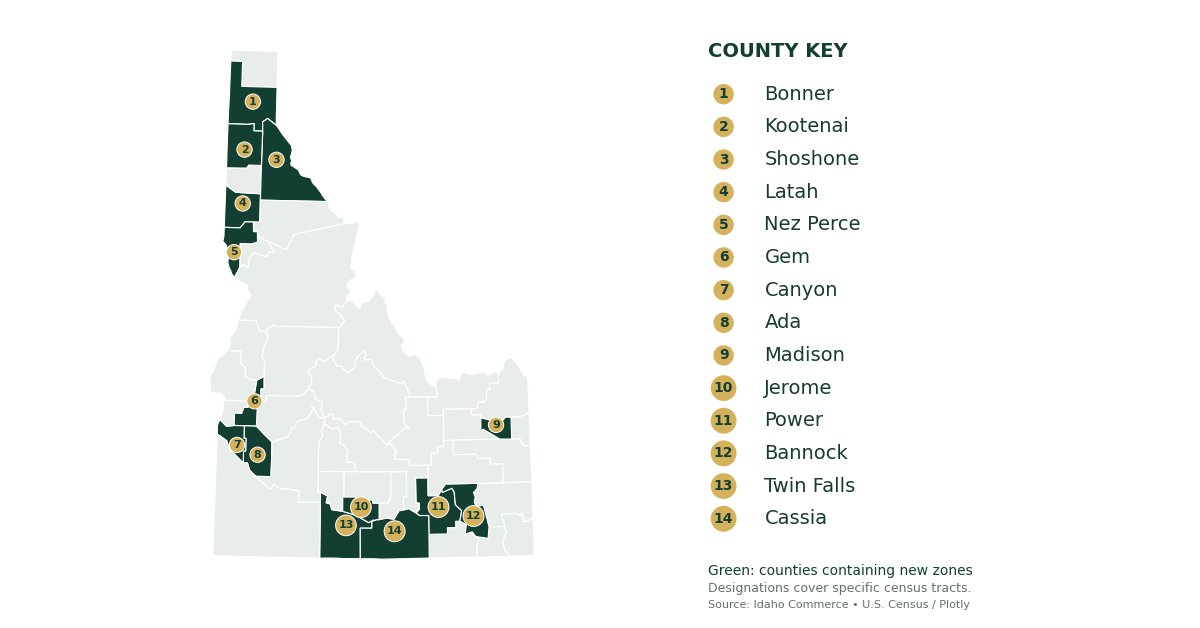
The U.S. Treasury has certified 25 new zones across 14 Idaho counties under the updated Opportunity Zone 2.0 program. The designations begin January 1, 2027, and remain in effect for 10 years, through December 31, 2036. The program aims to encourage private investment in eligible communities through federal tax incentives, according to the IRS announcement.
For residents, the potential impact includes housing development, business investment, and employment opportunities. For investors, the program creates incentives to commit capital to qualifying projects over longer periods. The designation itself, however, does not guarantee that a particular development will happen.
According to the U.S. Senate Finance Committee’s announcement, the renewed program also includes stronger incentives intended to help rural communities attract investment.
Ada County has seven newly designated tracts: five in Boise, one in Garden City, and one in Meridian. Canyon County has three, including two in Nampa and one in Caldwell. Emmett adds another designated tract in neighboring Gem County.
Together, these locations give the Treasure Valley a substantial presence in Idaho’s new round of designations. The remaining counties represented are Bannock, Bonner, Cassia, Jerome, Kootenai, Latah, Madison, Nez Perce, Power, Shoshone, and Twin Falls.
An important distinction: these designations cover specific census tracts within those counties. Living or owning property in a highlighted county does not automatically mean a property sits inside an Opportunity Zone. The Idaho Commerce Opportunity Zones portal lists each approved tract and provides access to boundary mapping.
The investment mechanism centers on Qualified Opportunity Funds. Eligible investors can reinvest qualifying capital gains into these funds, which direct money toward qualifying businesses or properties in designated zones.
Under the updated rules, qualifying investments generally receive a five-year deferral of eligible gains. Holding an investment for at least five years can provide a 10% basis increase, reducing the deferred gain subject to tax. Investments in qualifying rural opportunity funds can receive an enhanced 30% increase.
These percentages describe adjustments to taxable gains, not guaranteed investment returns. Eligibility depends on the fund, investment, holding period, and applicable requirements. HUD’s Opportunity Zones overview explains the differences between the original and updated programs.
Nine of Idaho’s new zones are classified as rural, while 16 are urban. Rural selections include areas in Emmett, Burley, Jerome, Lewiston, Moscow, Rexburg, Blanchard, and the Silver Valley.
Idaho already has experience with the program. According to Idaho Commerce’s certification announcement, the original round generated approximately $200 million in investment across 28 census tracts between 2018 and 2024.
For Boise and surrounding communities, the next chapter will be measured by what gets built, which businesses grow, and how residents benefit.
Curious whether a nearby property falls within a new zone? Start with Idaho Commerce’s tract list and mapping resources, then contact the relevant local jurisdiction to confirm the boundaries before making project plans or investment decisions.